Thursday, December 21, 2006

Nano No-No

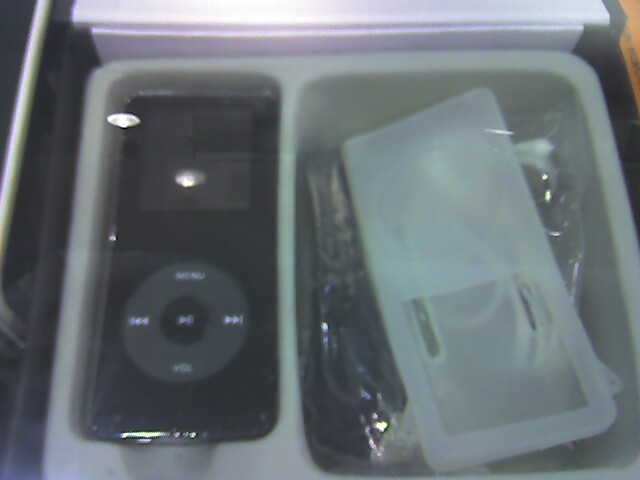
Joining the YottaMark Hall of Shame this holiday season, is this knock-off of the iconic iPod Nano. For those who still think fakes are a problem for 'other' countries ... this was on sale in a store in Philadelphia Airport.
Monday, December 11, 2006

Fake Economy

This week's BusinessWeek included an expose of the ongoing problem of counterfeit drugs entering the US via Internet Pharmacies. As we have noted before, it is practically impossible to distinguish real from fake:

Recently security officials at AstraZeneca put fake and genuine versions of its $4.6 billion-a-year heartburn medicine Nexium on the desk of CEO David Brennan. They looked exactly the same, he says. "This is a very serious problem that is accelerating," Brennan adds.


In addition to contaminated and non-efficacious drugs, the article recounted how fakes can also contain too much active ingredient - with disasterous results. This recent article from Law.com provides a great summary of the problems of tackling counterfeit drugs - and some startling new estimates: 200-300,000 Chinese die a year from counterfeit drugs.

Nevertheless, entire local economies in China may rely on counterfeits:
Ohio State law professor Daniel Chow, a counterfeiting specialist, points to the market in Yiwu, a city of 650,000 south of Shanghai. More than 30,000 wholesale distributors sell more than 40,000 different kinds of products in the Yiwu market, 80 to 90 percent of which are counterfeit. Chow estimates there are hundreds of towns like Yiwu and millions, if not tens of millions, of Chinese who depend on counterfeit goods for their economic livelihood.


Tuesday, December 05, 2006

The Mobile Phone as an Authentication Device

Purveyors of brand security technology have often resorted to proprietary scanning devices for checking the authenticity of products. For example: laser pens to make taggants fluoresce or cumbersome scanners with private keys to read barcodes. This is fine for a dedicated security force looking for one type of product - but limits how many people can authenticate products. Some vendors have modified camera phones with lenses or filters - but this doesn't make them any more widely useful than a proprietary scanner. Now, camera phones are emerging as a feasible technique for reading barcodes - and we see some promising trends that should encourage more mobile phone manufacturers and carriers to adopt this technology. This will have a dramatic impact on the ability to use a mobile phone to verify products.

Microsoft recently announced it will support QR codes on its Windows Mobile devices. The beta site is down - but watch this space for updates. QR codes are very widely used in Japan - and look like they will take off in China too.

Nokia also recently announced that the US version of the N93 will be able to read QR codes. This will be the first US cell phone shipped with this capability.

There are multiple startups (incl: Semacode, Kaywa, Shotcode, qode, quickmark) offering downloads for mobile phones to read both open-standard (datamatrix, QR) and proprietary (shotcode) symbologies - and it remains to be seen how the US and European markets will play out. All of these, however, require a Symbian or Java phone - which are seldom found in the US.

YottaMark launched its mobile phone authentication service in the summer of 2006.

Sunday, November 12, 2006

Who's Willing to Talk About Fakes?


The U.S. Chamber of Commerce and Accenture teamed up to write up real world case studies of companies who are actively tackling fakes - and who are willing to talk about it. The interim version of this tool kit contains four of these case studies (New Balance, Merck, and Bendix).


There are some enlightening examples contained in these cases:

  • Manufacturing codes are attached to legitimate Bendix parts; but these are easily duplicated by counterfeiters. Moreover, makers of fake products can always claim that codes are "their own." This clearly makes the case for a 'trusted' source for authenticating codes on products - and making them impossible to guess.
  • New Balance supplies its factories with difficult-to-copy labels with an embedded code. Because labels must be attached to every shoe, this is an effective way to control production integrity and spot fakes or unauthorized overruns. In the near future, New Balance may also assign a unique number to every item—making it possible to determine where and when every article was made.

A final version of the tool kit, with eleven case studies is due out in November 2006.

The Chamber of Commerce has also launched a nicely produced website.

Friday, November 03, 2006

Good Morning America – your fakes are here.

Those of us in the industry have know of the dangers of counterfeit goods for some time ... now consumers are being reminded by mainstream news. This week, Good Morning America aired a report by ABC News on the dangers of counterfeits – illustrated with a few examples of “frightening” or even fatal consequences to consumers who buy counterfeit goods. Whether it is fake prescription drugs, shampoo, extension cords or car parts, counterfeit items are affecting people everywhere.

Consumers were – as usual - advised to “get to know what a ‘real’ product looks like” and buy from reputable retailers. We think it’s impractical to expect consumers to be experts on packaging. Sadly, that's about the only way today until brand owners adopt an easier to use solution.

Other news this week ...

FDA Orders Recall of Fake Test Strips. The counterfeit test strips could potentially could false high or low blood glucose values. The FDA says it does not know how many of the counterfeit strips are out on the market. LifeScan, who makes the genuine test strips, say they do not know either. More information can be found at www.GenuineOneTouch.com or call LifeScan at (866) 621-4855.

More Con than Condom. Bogus Durex condoms look identical to genuine Durex packs. The only difference is an outdated code number printed on the bottom. The firm had no idea about how the fakes had appeared in shops and has now taken out ads in national newspapers to warn customers.

In the first six months this year, counterfeit and pirated goods valued at $699.3 million were discovered in 760 incidents in 69 countries, according to statistics compiled by Gieschen Consultancy, a Canadian company that tracks counterfeit merchandise globally.

Thursday, September 28, 2006

Fighting fake drugs ... without a dose of RFID

EU Eschews Track-and-Trace

Interestingly, the European Parliament and the EMEA has not gone as far as its American counterpart, the US Food and Drug Administration (FDA), which has urged the drug industry to move towards electronic pedigree, such as RFID. The MEP’s want awareness campaigns, rather than high tech to fight drug counterfeiting.

WHO planning IMPACT

The WHO recently announced its IMPACT program (International Medical Products Anti-Counterfeiting Taskforce). It too will include public education, as well anti-counterfeiting technology; harmonising legislation; tougher enforcement; and strengthening regulatory agencies. One option IMPACT will pursue is to give each packet of drugs a code number that can only be read when the seal is broken. The precise details are secret for now, but will be revealed in Bonn in November.

Coding Drugs Actually Works

Thanks to concerted efforts of the National Agency for Food and Drug Administration and Control, the level of counterfeit drugs in Nigeria has dropped from a staggering average of 41 per cent in 2001 to 16.7 per cent this year.

http://allafrica.com/stories/200609190389.html

Pfizer’s going direct

In order to circumvent some of the supply chain weaknesses caused by distributors, Pfizer is shipping some drugs direct to the pharmacy now in the UK, according to a report in yesterday's Time's newspaper.

Three times in the past year, fake versions of Pfizer’s heart drug Lipitor found their way into the NHS supply chain. When a drug is counterfeited, the entire batch bearing the same lot number has to be recalled.

Tuesday, August 22, 2006

Auctioneer, Heal Thyself!

It's not easy being the world's largest flea-market. Just like their trestle-table and tarp brethren, eBay suffers from sellers hawking fakes. eBay has come under attack several times recently from companies (such as Tiffany's) and trade groups (such as the French Luxury Manufacturers), upset at the fact that eBay makes a commission on the sale of counterfeit goods. The law is murky grey here - after all, are newspapers liable for the goods sold in their classifieds? eBay provides brand owners tools (called VeRO) to shut down suspicious auctions. "Not enough", say the brand owners, who want more proactive measures.
Leather goods maker Louis Vuitton, a unit of LVMH, the world's largest luxury goods group, last year found 235,000 examples of counterfeit articles on 340 eBay pages. In one case, it tracked more than 100 copies of the same article being sold within one hour, said Jamet, who is also a senior executive at LVMH.

In 2004, Tiffany secretly purchased about 200 items from eBay in its investigation of how the company was dealing with the thousands of pieces of counterfeit Tiffany jewelry. The jeweler found that three out of four pieces were fakes.

But is it feasible that eBay (or Yahoo, or classifieds for that matter) can authenticate the 60 million products that their members sell on their sites? Then there's alibaba.com, a positive Alladin's cave of products.

As eBay and other online auctions grow, a better method for easily authenticating products is required - certainly if buyers are to trust these sites.

Sunday, August 20, 2006

More Reasons to Whine

Last week the Wall Street Journal published an in-depth article on the problem of fake wine. We've discussed this persistent problem previously (for example fake Canadian Icewine). What's extraordinary is how little manufacturers have done to protect their products. There are no security features - and all the discernable characteristics (label, bottle, foil capsule) are easy to counterfeit.

"Counterfeiting is always on the rise," says Giuseppe Fugaro, head of the Ministry of Agriculture's antifraud unit in Naples. Last month, he pulled 15,000 bottles of fake Falanghina, an appellation of white wine produced around Naples, from Italian store shelves. In 2005, he rounded up more than 6.6 million bottles of bogus Falanghina in Italy.”

“In Italy, the fakes that have turned up in recent years have forced producers of top appellations such as Chianti Classico to rack up more than $1 million in legal fees fighting fraud at home and abroad.”

“Winemakers acknowledge that no vineyard is safe. French winemaker Baron Philippe de Rothschild SA says its growth in China came to a halt a decade ago because of counterfeiters there.”

Some manufacturers are talking about embedding RF devices behind the label ... not that this is much help to the average quaffer, of course.

The New Tylenol Scare? Explosives disguised as cosmetics and sports drinks

Following the foiled plot to blow up planes leaving the UK, manufacturers of cosmetics and beverages are facing a new and unexpected threat: use of their packaging to conceal explosives. Airports have responded by not only banning liquids and gels - but also creating 'sterile' zones beyond security. The question, of course, is: how can one tell that the products haven't been tampered with? Most foods and beverages have tamper-evident packaging - but many liquid products do not. Most concerning was the revelation that one of the plotters worked at the airport. A new level of product integrity is required: the ability to determine with high confidence that a product has not been maliciously tampered with.

Wednesday, July 19, 2006

If you thought real cigarettes were bad ...

As if genuine cigarettes weren’t bad enough, the Irish market is being flooded with the fake cigarettes. From Sunday life in UK:

... half of all illegal [cigarettes] smoked in Ulster are believed to be cheap copies [from China], even more deadly than ordinary cigarettes and containing almost three times the quantity of tar, three times more arsenic and six times the amount of lead.

Add another item to the list of potential hazards of smoking… shoddily made, highly flammable fake lighters. This article (Fake Zippo Lighters WSJ Asia, June 2, 2006) throws light on the problem of fake Zippo lighters:

On March 15, 2005, Chinese officials received a tip from an informer that a crime was being committed on the country’s east oast. Moving quickly, officials raided a factory a few days later and found the illicit goods they were looking for: 32,980 fake Zippo lighters. Zheng Shengfen, the factory’s manager, was eventually arrested, and executives and lawyers for Zippo Manufacturing Co., who had been battling Chinese counterfeiters for years, thought they had won a major victory against product piracy. When the case went to court, the judge fined Mr. Zheng the equivalent of around US $12,500 instead of putting him in jail, upsetting officials at Zippo who had been pressing hard for, and expecting, a prison sentence.

Saturday, June 24, 2006

Time to take fake seriously

This week saw another flurry of news on a wide range of fake goods - including a report from Russia on the extent of the problem of fake alcohol, that is estimated to kill 42,000 Russians a year. If fake booze doesn't kill you - the head of a fake golf club flying off, might. This article claims the problem is at epidemic proportions in the US... and gives buyers the usual platitude: if the price is too good to be true, it probably is. How long before the counterfeiters simply charge full price to defeat this technique?? The spectre of counterfeit electronics also made it into the media this week: fake memory cards. Enlightened manufacturers are finally beginning to put unique codes on products that consumers can check.

And finally, some (not new) numbers from the WSJ:

The global economy for illicit goods is massive, but by definition impossible to measure. What we do know is that it is getting bigger. The number of counterfeit items seized at European Union borders has increased by more than 1,000%, rising to over 103 million in 2004 from 10 million in 1998. At U.S. borders, seizures of counterfeit goods have more than doubled since 2001. Even allowing for improved detection rates, there is little doubt that the situation is getting worse. In the 1980s, 70% of firms affected by counterfeiting were in the luxury sector. But in 2004, more than 4.4 million items of fake foodstuffs and drinks were seized at EU borders, an increase of 196% over the previous year. In the U.S., seizures of counterfeit computers and hardware tripled from 2004 to 2005. There are also fake electrical appliances, car parts and toys.

Counterfeit medicines were reckoned to account for almost 10% of world trade in medicines in 2004. A recent study in the Lancet concluded that up to 40% of products labeled as containing the antimalarial drug artusenate contain no active ingredients. Most of these fake drugs are headed for the world's poorest countries. The World Health Organization estimates that 60% of counterfeit medicine cases occur in developing countries.

Thursday, June 15, 2006

Just to prove it's not just luxury goods and drugs...

Sarah Lee, the diversified consumer goods company, successfully sued a distributor for reselling counterfeit ... wait for it ... shoe polish! Armed Marshalls raided the Pell warehouse and found 46,000 tins of fake polish imported from China and branded as Kiwi. Apparently the stuff smelled so bad, they had a sign that said "Smells Terrible But Still Works Great."

And then there's fake candy (hats off to Jim Rees for finding these pieces):

Bags, Balls and Bad Medicine

This week has seen yet more bad news about the growing problem of fakes. Is the problem an increasing number of fakes, or an increased awareness? Nobody knows for sure.

  • Spalding is busting someone's balls in China (sorry) ... fake balls claiming to be Spalding's. They estimate the extraordinarily precise figure of 5.6 fake balls being sold for every real one. As we often hear, the company is not getting a lot of suport from local officials - who are reluctant to crack down. Expect this problem to get MUCH worse as the olympics near. We predict that any brand associated with the Olympics will be counterfeited.
  • Once again, fakes have (allegedly) shown up at WalMart. This time, LVMH is suing Sam's Club for stocking what it claims are fake Fendi handbags. WalMart is maintaining they are real - but it's not the first time this has happened. WalMart settled similar claims by Tommy Hilfiger, Polo and Nautica. What is amazing is that retailers and shoppers cannot easily verify if the product is real or not (or diverted). WalMart's defense may well be: "we couldn't tell they were fake". Fendi obviously doesn't want its high end brand associated with the bargain basement big box retailer - so perhaps they should give their customer's a way to authenticate they're getting the real deal?
  • A recent report out once again shows how enormous and tragic the crime of counterfeit anti-malarial drugs has become. While high speed drug testing equipment may work - it is pitiful that this lifesaving drug still relies on a crummy hologram (that has been counterfeiting 12 different times) for protection. We have blogged about this problem before - but the global health agencies seem slow to tackle the problem. Who will step in and save the millions of children affected by malaria, and potentially at risk from substandard, adulterated, or no-efficacy drugs?

Sunday, June 11, 2006

Counterfeit Britain by the Numbers

The UK is very active in tackling its counterfeiting problem. It is the home of the ACG, as well as many respectable and innovative anti-counterfeit technology firms. High taxes on certain products make fakes more attractive - but it is reasonable to assume that the rates of counterfeiting seen in Britain are reflective of all developed economies.

According to Bob Fenton, security liaison manager for the Tobacco Manufacturers’ Association (TMA), out of 229 packs collected from trash cans after a sporting event, 14 — or 6% — are counterfeit. This is considerably higher than the rate the TMA estimates of fakes of all cigarettes consumed in Britain (2.6%).

In 2004, counterfeit Lipton teabags made up 67% of the foodstuffs seized in the UK. This may explain why your correspondent has always found a cup of Lipton tea to be a pale imposter of the decent British cuppa.

Adidas and Nike copies accounted for 27% and 26% of seized sportswear. Louis Vuitton ripoffs comprised 18% of seized accessories. Philip Morris counterfeits made up 47% of seized cigarettes. And Rolex fakes accounted for 16% of watches and jewellery.

Unilever said “We have come across our brand being used on sun-care products claiming a protection factor of 90. There are two things wrong with that — the sun-protection numbers go up to only about 50; and, worse still, this product did not contain any sun protection at all."

Monday, June 05, 2006

Counterfeit goods ... how to spot one.
The last few weeks have provided a wave of news that helps us build a clearer picture of just how bad the problem of counterfeits can get, and how hard it is getting to spot them.
  • Bausch & Lomb has recalled millions of bottles of ReNu ($200 millions) and is potentially liable ($ billions) as a result of contaminated contact lens fluid - and the inevitable flood of personal injury lawyers builds (such as as the hysterical 1-800-BAD DRUG). This product was real - not counterfeit. But the case shows just how much damage a contaminated fake will do to a brand. Needless to say, counterfeiters don't worry about such things as cleanliness and bacterialogical and fungal control.
  • Bosch, the German auto parts maker, has stepped up it's efforts to curb counterfeiting of spare parts - where it is particularly rampant in the Middle East. Unsubstatiated estimates suggest 30% of parts are fake. Bosch has launched a public education effort to attempt to dampen demand.
  • MSNBC's Dateline ran an investigative piece on Sunday, "uncovering" the shocking facts of the counterfeit drug trade for TV viewers. Katherine Eban, of course, already uncovered this tangled web of deceit, lies, bureacratic foot-dragging, and political finger-pointing in her excellent 2005 book "Dangerous Doses" (which has just been published in paperback). Indeed, she exposed the same cases: Procrit, Epogen, Lipitor, Retrovir... and the Dateline program has updated the list with counterfeit Viagra, Arisept, Norvasc, Crestor, Vaniqa, Xenical and Tamiflu. At the end of the program they talked about RFID - about the trials with Viagra and Oxycontin... but widespread RFID is widely expected to be about a decade away and faces awesome hurdles.
  • Virginia police busted a sporting goods retailer for selling hundreds of thousands of dollars of fake Nike and Timberland product. Once again we hear that "the fake boxes are perfect, the boots are perfect." Genuine Timberland boots have a leather shoe lace through them that are sealed with a honey wax on the end, while the fakes are sealed with plastic on the end. A representative of Nike shoes told police that for many of the counterfeits, "they have to cut the soles open to know whether they're real or not."
Isn't it time that consumer's had a better way to tell if their products are real or not other than closely inspecting the font on the label or cutting open the soles on their sneakers? We think so.

Sunday, May 21, 2006

Shameless Fake of the Month

China's semiconductor community lost face this month when it was discovered that one of its top researchers, Dr. Chen Jin had blatantly faked his research. Dr. Chen had claimed that his home-grown DSP chip was capable of processing some 200M instructions per sec. Instead, it turned out that Dr Chen had taken chips produced by Freescale Semiconductor (formerly a unit of Motorola) and then used low-paid migrant workers to scratch its trademarks off and replace them with that of his company's, Hanxin.

Friday, May 05, 2006

Can RFID be a Security Solution?

In recent months we've heard announcements from major pharmaceutical players who are piloting RFID on their high-profile, most-counterfeited drugs. We've also reported here in the past on the costs of using RFID, and stories about their security weakenesses.

Seems like a paradox? Not really.

The FDA is pushing drug companies very hard to implement its vision of pharmaceutical security which relies on an electronic pedigree of every transaction at every point in a drugs supply chain. The Florida ePedigree rules come into effect this July, CA and NV are soon to follow. Drug companies are running pilots so they can't be accused of doing nothing - but the costs are extraordinary, and expectations are low. John Theriault heads security at Pfizer, he was recently interviewed on NPR.
JOHN THERIAULT: Is RFID you know a magic bullet that's gonna solve this tomorrow? The answer's absolutely not.
The company has tagged all bottles of Viagra that ship in the US. But Theriault says only one of the wholesalers Pfizer ships to have invested in the technology to read the tags.
JOHN THERIAULT: You have to understand that for RFID to work, there has to be technology deployed throughout the entire supply chain from the manufacturer to the point of sale. And that technology is currently expensive; it currently does not exist throughout the entire supply chain.
Wired magazine is running a piece this month on just how easy it is to crack RFID tags, replace their data, spoof them, and steal from them. Many security experts are predicting that RFID will be implemented with insufficient security, and users will have unrealistic expectations about how secure the data is.

Ari Juels, of RSA labs, has published several excellent articles on the weaknesses and challenges of RFID. In once of his presentations he makes the following observation:

1980: Not one reported incident of a computer virus in the wild
1999: Not one reported incident of a major DDoS attack on the Internet
2005: Not one reported incident of fraudulent use of RFID tags.

Friday, April 28, 2006

"IC" Might Mean: It's Counterfeit

A recent
article from the IEEE throws wide open the scale of the problem of counterfeit electronic components. The AGMA has estimated that an astonishing 10% of the global technology products are counterfeit. The article rightly points out that the cost is not just lost profit, but also the warranty cost of replacing faulty equipment that may have been compromised by a single bogus component.
Some examples:
  • $1.2 million of fake Compaq computer parts - including warranty cards
  • Fake GFI outlets - with fake UL logos on them, and without the GFI circuitry
  • Fake Philips IC's that Philips thought had been scrapped, that showed up at a military contractor
There are a couple of sites dedicated to tracking counterfeit electronics, including the ERAI as well as GIDEP (look under Failure Experience). What's astonishing is the quantity - and these are those products that have been volunteered. Manufacturers are still reluctant to go public with evidence of fakes - for fear of driving away customers. There are a lot more articles on the subject here. A worrisome lesson is the drive for more regulation in the industry (such as EU lead free legislation) creates new opportunities for counterfeiters to enter and profit.


The IEEE article discusses potential remedies to the problem. RFID is too expensive and lacks standard schemes for anti-counterfeiting, holograms are too easy to fake, taggants can work for some applications but not all. As UID gains ground in certain markets (e.g. DoD and aerospace), we think that unique part marking and scanning is a cheap and viable method. However, the UID must be secure (no serial numbers), and standardized so that anyone can easily validate it.


Wednesday, April 26, 2006

How Bad is India's Fake Problem?


A recent report in the Daily India claims India is fast emerging as one of the major manufacturing hubs of fake products ranging from cosmetics to electronics, software, mineral water, books, music cassettes. Interestingly, mineral water is one of the easiest products to counterfeit. It is trivial to refill empty bottles, and even acquiring new, tamper-evident closures is a simple matter.

Counterfeit products on an average constitute about 20 percent of the legal market. In case of some products, it is even 50 percent or more,' said Sachit Kumar, director of Globe Detective Agency Pvt Ltd.

We reported here earlier, that up to 50% of the "Scotch" whiskey in India is fake. Between 10 and 15% of inkjet cartridges are reported to be fake.

Wednesday, April 19, 2006

Fighting Fakes the French Way

The INPI, CNAC and French government have launched a campaign designed to educate the public about the dangers of buying fake goods - and who benefits from the proceeds. In inimitable French style, the website has funky, Clouseau-esque music and even funkier cut-out animation graphics.

Even if you can't read a word of French, the site is terrifically entertaining and well thought out.

Merci!
